
Text taken from the club newsletter.
THE RIVER OF NO RETURN
Warm and dry in Idaho by MEGAN SETY and TONY GAZLEY
Tramping in Idaho during summer is, unsurpris- ingly, nothing like tramping in NZ. For starters it doesn’t rain. We had a 15 day trip and didn’t need a parka—actually we didn’t even really carry one. But there are a number of things you do need to think about in the Idaho backcountry that are not a worry here—such as: bears, mountain lions, rattle snakes, wildfires (we had to change our planned route to go around a large active forest fire), lightning, falling burnt trees, ticks, poison ivy, and the heat—some days were over 40 degrees. But actually it is all these things that make the place exciting. And it is rather nice coming from cold, wet, Tararua trips to always being dry and warm and needing only one change of clothes and a jacket for the cooler evenings. Instead of carrying extra clean clothes you just jump in a river and 30 minutes later you are washed and dry again.
We made a trip a few years back when we tramped for 13 days to meet up with friends with rafts then paddled down the ‘River of No Return’ for six days to get home. With only good memories of that time we decided to go back for more. In early August we met in Boise and spent a day getting gear sorted. We knew that maps would be an issue—on our first trip we had a few navigation problems when the tracks shown didn’t match what was on the ground. This time we got what we wanted—sort of. But we ended up with a strange mixture of a route guide and copied maps, some sheets with imperial units for distance and metric for height, and others with metric for distance and imperial for height, and many with strange grid scales—it was very odd.
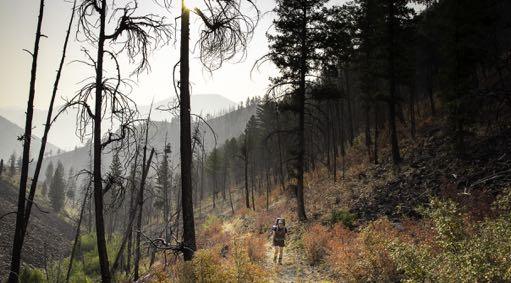
From the outside North American pine forests look rather uniform and boring but underneath there is a varied mix of plants and animals. Much of the area has been burnt by natural fires that are nowadays left uncontrolled, but under the dead trees there are often fields of bright flowers and small new trees already growing. There are always chipmunks scurrying around, and many birds including osprey and bald eagles. And we sometimes heard woodpeckers—their call is so amusing that we would always stop and listen to their knocking sound.
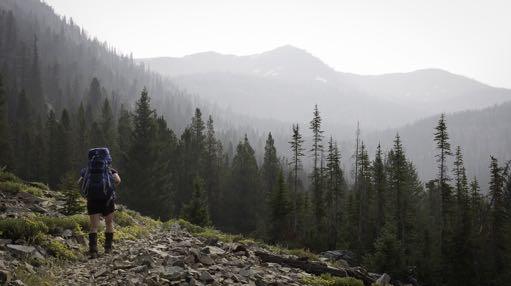
For the first few days the air was hazy with smoke from the nearby forest fire and also from many fires in Oregon, but a wind change cleared it away for a while.
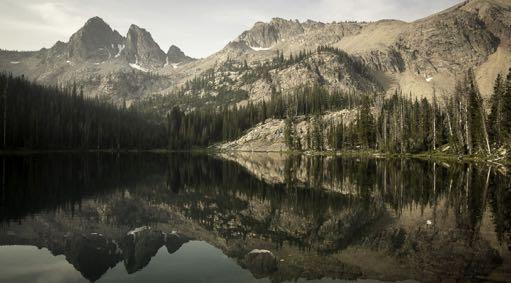
For nine days we wandered through the valleys, climbed up to the ridgelines, passed lakes surrounded by flowers, and even crossed some old winter snow. We passed a few remote ranches and spent time listening to the occupants (one a young cowgirl with a loaded pistol in her pocket) tell us their interesting tales.
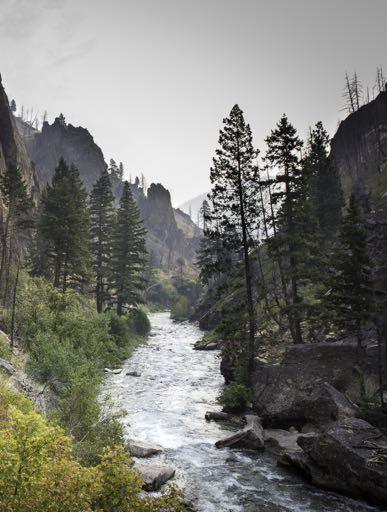
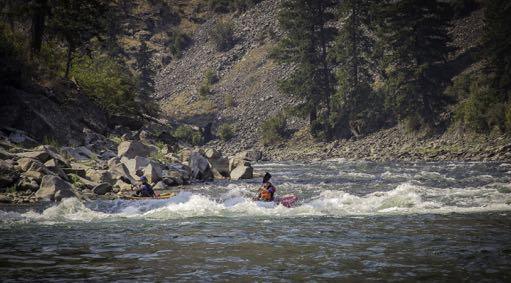
Then we spent six days paddling ‘rubber duckies’ in a group down the Salmon River. After many hot days walking getting wet in the Grade 3 rapids was so pleasant—and with others to help with camping chores it rounded off another amazing trip in Idaho.
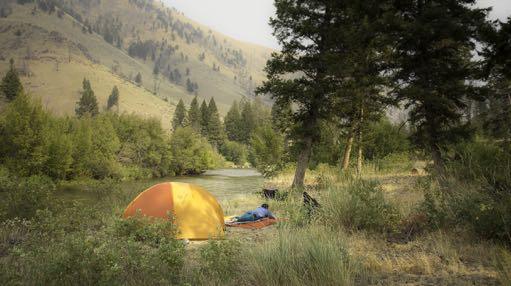
On the track to Crimson Lake with the distant hills hazy from the smoke of many forest fires. This track was graded and easy to follow unlike many of the ones on the following days. We knew from our previous trip that some of the tracks shown on the maps would be overgrown, or simply shown in the wrong place, and it was often easier to travel off-track through the forest. Our packs were heavy with food but light on other gear. We carried a tent (to keep the bugs away at night), cooker, and each a light sleeping bag and toothbrush and not much else. Our first night’s camp was a cozy spot under the pines on the right-hand side of the lake.
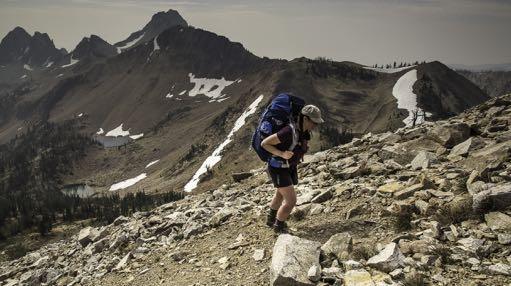
Most of the tracks followed the valleys and to avoid long detours it was simpler for us to just climb up to the ridges and drop directly down the other side. The travel on the tops was always easy whereas overgrown or non-existent tracks in the stream valleys were mostly awkward and unpleasant. Many of the tracks were built by workers as part of a post-depression work scheme, and some are not maintained and are now difficult to follow. However, private ‘outfitters’ keep others open and suitable for pack-horses and these make for pleasant and fast travel.
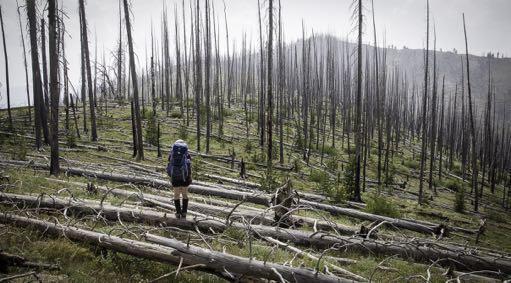
Most days the temperature increased until mid-afternoon when it became almost impossibly hot for us to continue. So we generally started walking early then when it became too unpleasant we just relaxed in the shade for a couple of hours and carried on again later in the afternoon. But sometimes it was just too tempting to stay stopped and camp wherever we happened to be. Off-track tops travel was always easy enough but sometimes just slow with many fallen burnt trees. Although burnt areas looked devastated it was all just part of the natural forest progression—the trees grow, they are burnt by fires caused by lightning, and then new ones grow again.
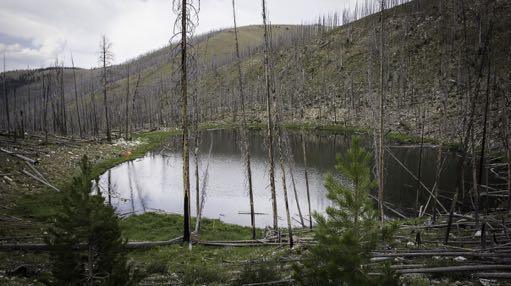
Our last tramping camp was by a small un-named lake and finding a tent site clear of potentially falling dead trees was difficult. During the night we watched a stunningly amazing pyrotechnic display of lightning—and then were a bit spooked when in the dark we heard a nearby tree come crashing down! We then met our group of paddlers and for six days enjoyed getting home down the Middle Fork of the Salmon River with its calm stretches and many rapids. All of us at some time were thrown out of the ‘duckies’ (inflatable kayaks like pack rafts) and took a swim through the rapids but it was all great fun. How better to end another Idaho adventure.
Comments
Comments are not open yet.