
This report is shown as scanned pages until a volunteer types it up. Skip to the machine-read text (unproofread), which a screen reader can read.
Machine-read text (unproofread)
Read from the scans by software, so it contains mistakes. Typing it up properly would help blind readers: use Suggest an edit.
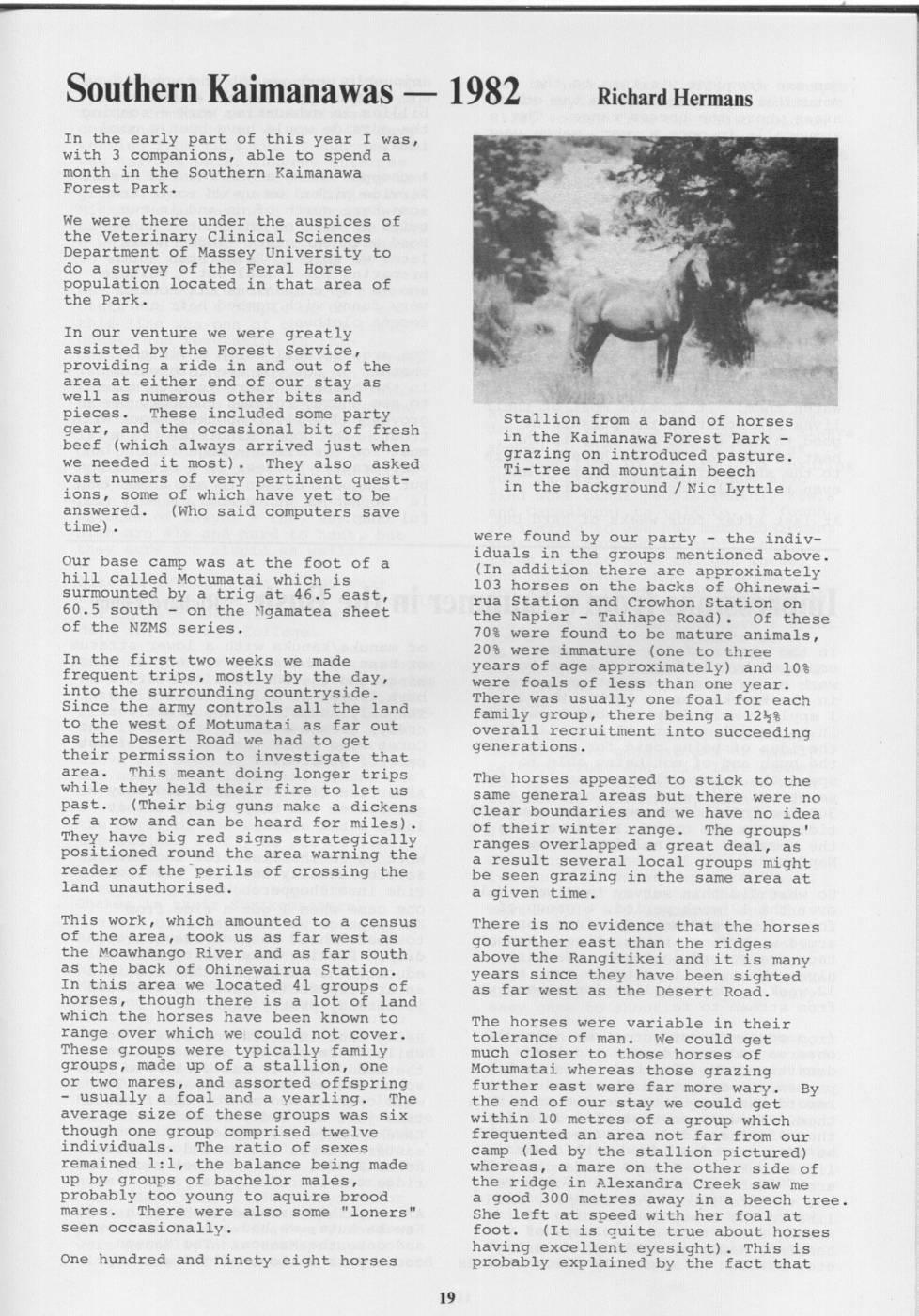
Southern Kaimanawas - 1982 Richard Hermans In the early part of this year I was, with 3 companions, able to spend a month in the Southern Kaimanawa Forest Park. We were there under the auspices of the Veterinary Clinical Sciences Department of Massey University to do a survey of the Feral Horse population located in that area of the Park. In our venture we were greatly assisted by the Forest Service, providing a ride in and out of the area at either end of our stay as well as numerous other bits and pieces. These included some party Stallion from a band of horses gear, and the occasional bit of fresh in the Kaimanawa Forest Park - beef (which always arrived just when grazing on introduced pasture. we needed it most). They also asked Ti-tree and mountain beech vast numers of very pertinent questin the background / Nic Lyttle ions, some of which have yet to be answered. (Who said computers save time). were found by our party - the individuals in the groups mentioned above. Our base camp was at the foot of a (In addition there are approximately hill called Motumatai which is 103 horses on the backs of Ohinewaisurmounted by a trig at 46.5 east, rua Station and Crowhon Station on 60.5 south = on the Ngamatea sheet the Napier - Taihape Road). Of these of the NZMS series. 70% were found to be mature animals, 20% were immature (one to three In the first two weeks we made years of age approximately) and 10% frequent trips, mostly by the day, were foals of less than one year. into the surrounding countryside. There was usually one foal for each Since the army controls all the land family group, there being a 12%8 to the west of Motumatai as far out overall recruitment into succeeding as the Desert Road we had to get generations. their permission to investigate that area. This meant doing longer trips The horses appeared to stick to the while they held their fire to let us same general areas but there were no past. (Their big guns make a dickens clear boundaries and we have no idea of a row and can be heard for miles). of their winter range. The groups' They have big red signs st trategically ranges overlapped a great deal, as positioned round the area warning the a result several local groups might reader of the perils of crossing the be seen grazing in the same area at land unauthorised. a given time. This work, which amounted to a census There is no evidence that the horses of the area, took us as far west as go further east than the ridges the Moawhango River and as far south above the Rangitikei and it is many as the back of Ohinewairua Station. years since they have been sighted In this area we located 41 groups of as far west as the Desert Road. horses, though there is a lot of land which the horses have been known to The horses were variable in their range over which we could not cover. tolerance of man. We could get These groups were typically family much closer to those horses of groups, made up of a stallion, one Motumatai whereas those grazing or two mares, and assorted offspring further east were far more wary. By - usually a foal and a yearling. The the end of our stay we could get average size of these groups was six within 10 metres of a group which though one group comprised twelve frequented an area not far from our individuals. The ratio of sexes camp (led by the stallion pictured) remained 1:1, the balance being made whereas, a mare on the other side of up by groups of bachelor males, the ridge in Alexandra Creek saw me probably too young to aquire brood a good 300 metres away in a beech tree. mares. There were also some "loners" She left at speed with her foal at seen occasionally. foot. (It is quite true about horses having excellent eyesight). This is One hundred and ninety eight horses probably explained by the fact that men are frequent visitors to the enjoyable work we got the word to pack Motumatai area but less so the other up. Scrubbing a months grime off areas where the horses range. The billies is exhausting work = soaping army calls in once a year, makes vast the outside would have been a good amounts of noise, and then leaves. idea. Once the census work was complete we A chopper doing a job for the Forest undertook some behavioural studies Service picked us up en route from on groups around the camp. We somewhere north of us and in two accumulated a stack of data and so trips we were on the Gentle Annie consigned it to a computer man. That Road with our gear. Three hours was in March and we haven't seen it later we were in Palmerston North since. preparing for a meal out - culture shock. My companions all looked The horses appear to dine predomvery funny with combed hair and inantly on tussock and other herbs. decent clothes. One thing we discovered was they stayed out all night grazing - most The area is well worth a visit inconsiderate really since it meant whether or not you are interested someone had to stay out all night to in the horses. There is lots more watch them! It appears most of their to see there, rolling tussock, beech lives are spent in the pursuit of groves and a river chocker-block with good things to eat and only in the trout. The upper Rangitikei is a heat of the day did the horses retire must for fishermen - huge fish - but to the shade of a tree and rest and very crafty. Access is a bit tricky even then only for a few hours. but the best person to ask about that is the Ranger at Turangi, a very help- At last after four weeks of hard but ful chap.
Comments
Comments are not open yet.