
This report is shown as scanned pages until a volunteer types it up. Skip to the machine-read text (unproofread), which a screen reader can read.
Machine-read text (unproofread)
Read from the scans by software, so it contains mistakes. Typing it up properly would help blind readers: use Suggest an edit.
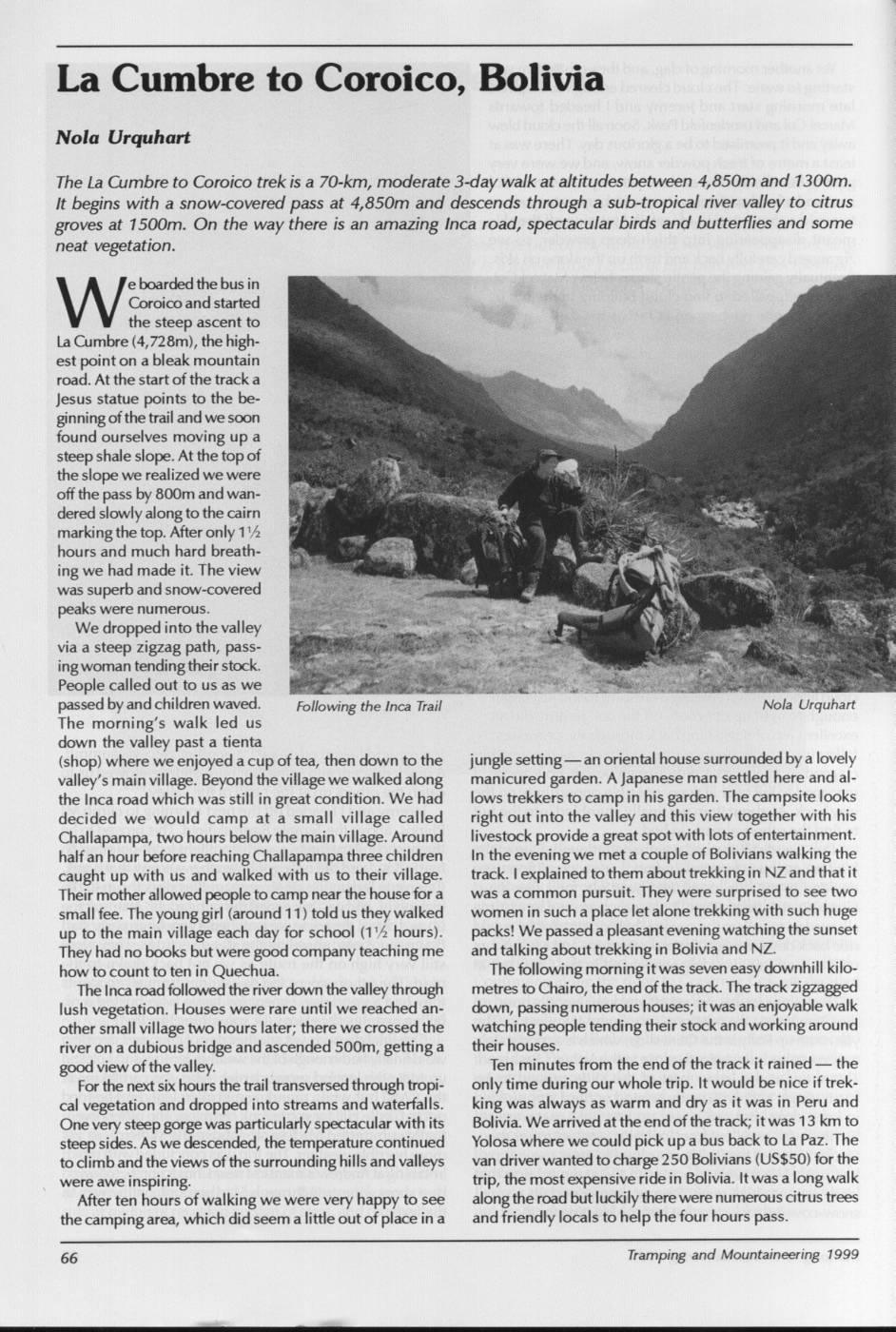
La Cumbre to Coroico, Bolivia Nola Urquhart The La Cumbre to Coroico trek is a 70-km, moderate 3-dayv walk at altitudes between 4,850m and 1300m. It begins with a snow-covered pass at 4,850m and descends through a sub-tropical river valley to citrus groves at 1500m. On the way there is an amazing Inca road, spectacular birds and butterflies and some neat vegetation. eboarded thel bus in W Coroico and started the steep ascent to La Cumbre (4,728m), thel highest point on a bleak mountain road. Atthe start of the track a Jesus statue points to the beginning of the trail and we soon found ourselves moving up a steep shale slope. At thet top of the slope we realized we were off the pass by 800m and wandered slowly along to the cairn marking the top. After only 1% hours and much hard breathing we had made it. The view was superb and snow-covered peaks were numerous. We dropped into the valley via a steep zigzag path, passing woman tending their stock. People called out to us as we passed by and children waved. Following the Inca Trail Nola Urquhart The morning's walk led us down the valley past a tienta (shop) where we enjoyed a cup of tea, then down to the jungle setting an oriental house surrounded byal lovely valley's main village. Beyond the village we walked along manicured garden. A Japanese man settled here and althe Inca road which was still in great condition. We had lows trekkers to campi in his garden. The campsite looks decided we would camp at a small village called right out into the valley and this view together with his Challapampa, two hours below the main village. Around livestock provide a great spot with lots of entertainment. half an hour before reaching Challapampa three children In the evening we met a couple of Bolivians walking the caught up with us and walked with us to their village. track. explained to them about trekkingin NZ and thatit Their mother allowed people to camp near the houset for a was a common pursuit. They were surprised to see two small fee. The young girl (around 11) told us they walked women in such a place let alone trekking with such huge up to the main village each day for school (1% hours). packs! We passed a pleasant evening watching the sunset They had no books but were good company teaching me and talking about trekking in Bolivia and NZ. how to count to ten in Quechua. The following morningi it was seven easy downhill kilo- Thel Inca road followed the river down the valley through metres to Chairo, the end of the track. The track zigzagged lush vegetation. Houses were rare until we reached an- down, passing numerous houses; it was an enjoyable walk other small village two hours later; there we crossed the watching people tending their stock and working around river on a dubious bridge and ascended 500m, getting a their houses. good view of the valley. Ten minutes from the end of the track it rained - the For the next six hours the trail transversed through tropi- only time during our whole trip. It would be nice if trekcal vegetation and dropped into streams and waterfalls. king was always as warm and dry as it was in Peru and One very steep gorge was particularly spectacular with its Bolivia. We arrived at the end of the track; it was 13 km to steep sides. As we descended, thet temperature continued Yolosa where we could pick up a bus back to La Paz. The to climb and the views oft fthe surrounding hills and valleys van driver wanted to charge 250 Bolivians (US$50) for the were awe inspiring. trip, the most expensive ridei in Bolivia. It was a long walk After ten hours of walking we were very happy to see alongt the road but luckily there were numerous citrus trees the camping area, which did seem a little out of placei in a and friendly locals to help thet four hours pass. Tramping and Mountaineering 1999
Comments
Comments are not open yet.