
Text taken from the club newsletter.
BEYOND TEMPLES
AND SHRINES
JAPAN AS A TRAMPING DESTINATION by KATJA RIEDEL with STUART PALMER
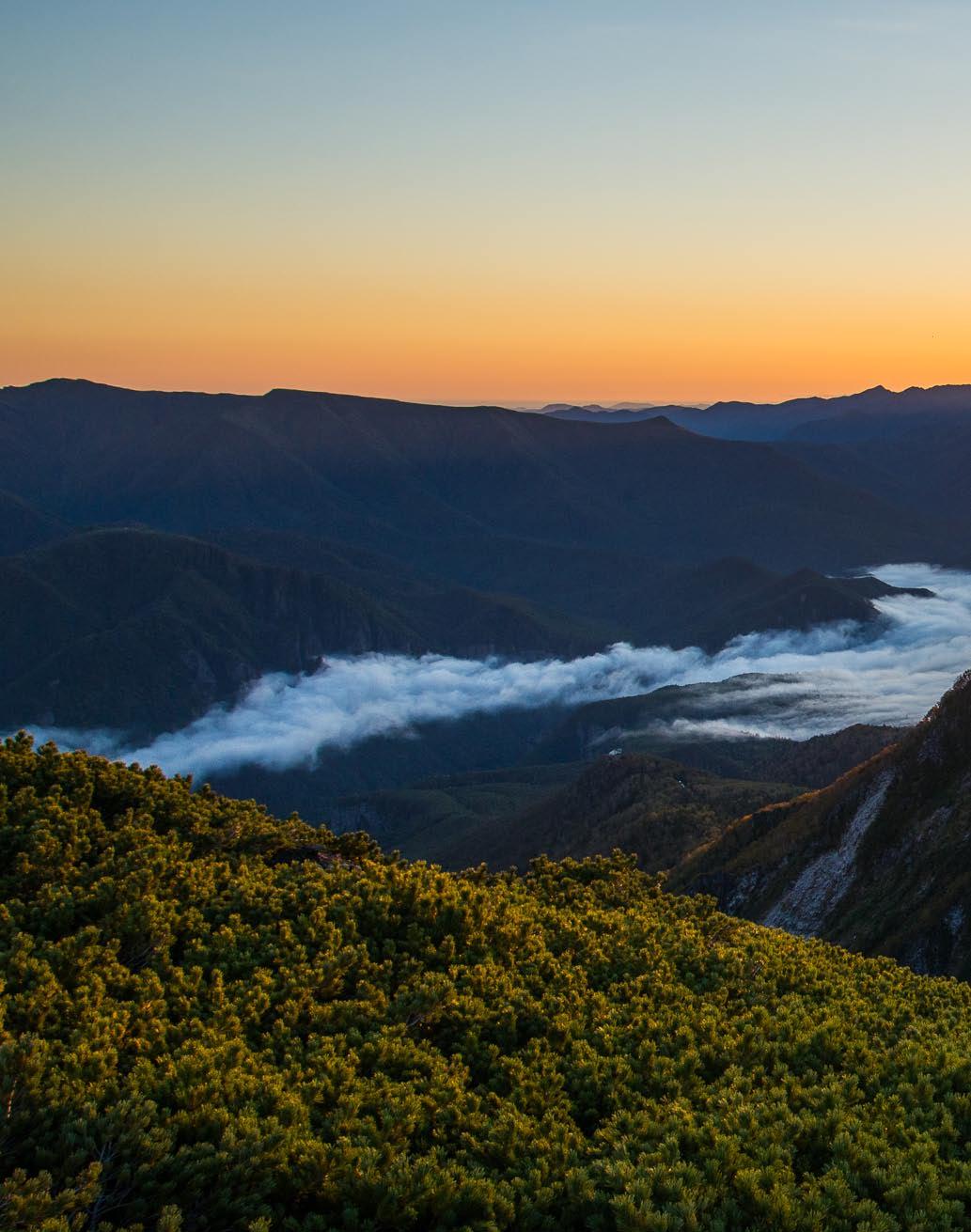
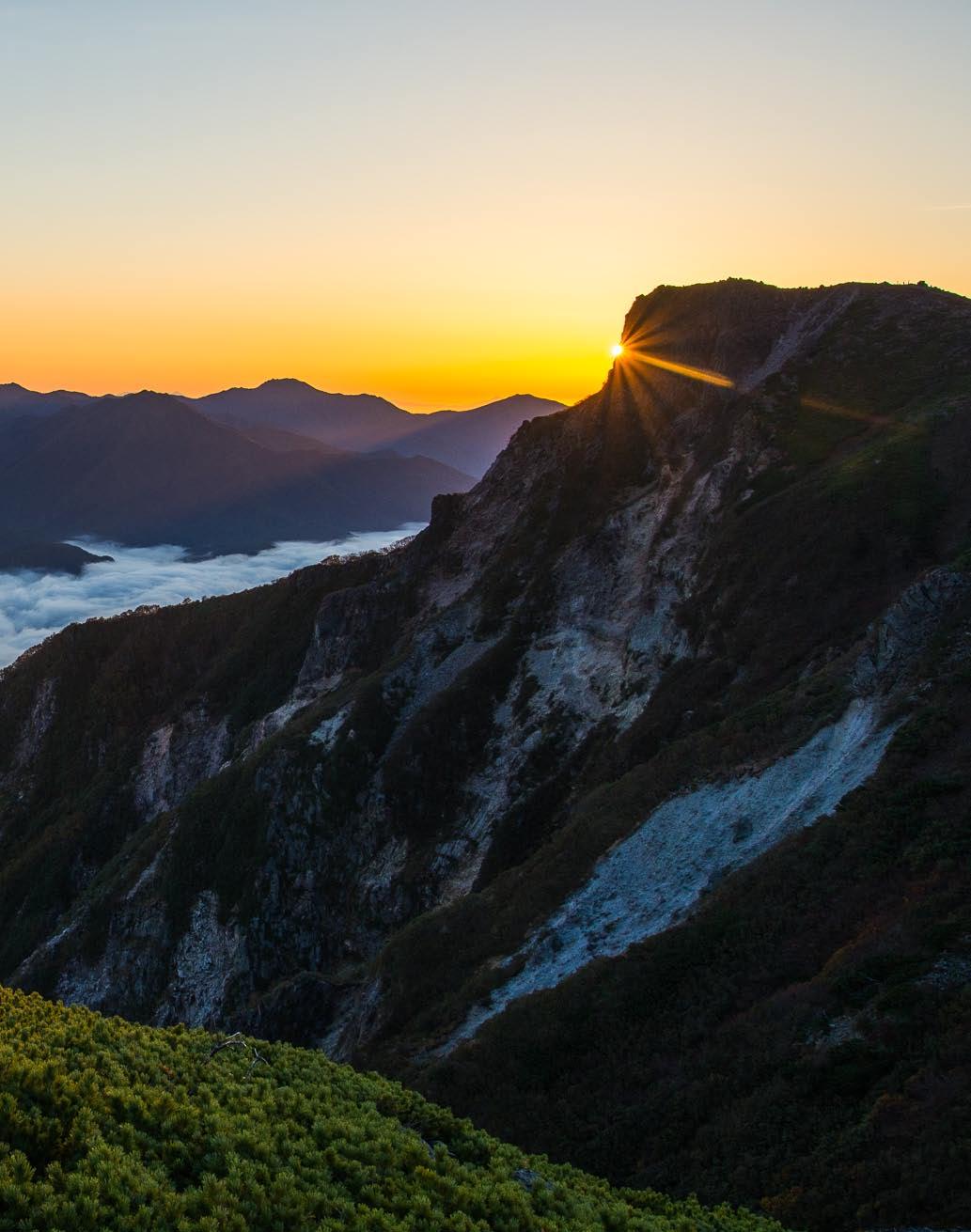
The land of the rising sun. Sunrise, Daisetsuzan National Park
A love for sushi and the urge to see the autumn colours took Stuart and me to Japan. Away from the concrete and neon lights of the big cities one can find steaming volcanoes, spectacular gorges, hot pools, lofty mountains and of course blood-red maple leaves.
We travelled twice to Japan, once exploring the main Island Honshū, and once cycle touring on Hokkaidō in the far north. Apart from the obvious tourist attractions we were mainly drawn to the Japanese Alps and the many national parks.
There are some peculiarities about tramping in Japan which seem a bit weird for the seasoned Kiwi tramper. To start with, there is a distinct tramping season from mid- July to mid-October. Huts will close at the end of October when the first snow could dust the mountains. Huts are huge! 1000 or 1200 beds are not uncommon. Bears roam the hillsides and Japanese trampers carry a bear bell; or two or three. Signs are in Kanji which means that prob- ably a ten minute stop is necessary to compare the dashes and dots on the sign with the ones on your map. Nature is not really wild here; concrete stabilises hillsides or wa- terfalls, ropes mark your way and just around the corner you might find a soft drink vending machine on the track (some even have hot coffee in cans).
A hut for a 1000
Public transport in Japan is great and buses and trains get you to nearly every place you want to go. From Tokyo we took a fast and comfortable overland bus to Hakuba, a small resort town in the Northern Japanese Alps. The Hakuba Alps Backpackers is run by Kiwi Troy and his wife Sakiko. They were fantastic and not only dropped us at the trailhead next morning, but also lent us two old mountain bikes that we stashed there for our journey back.
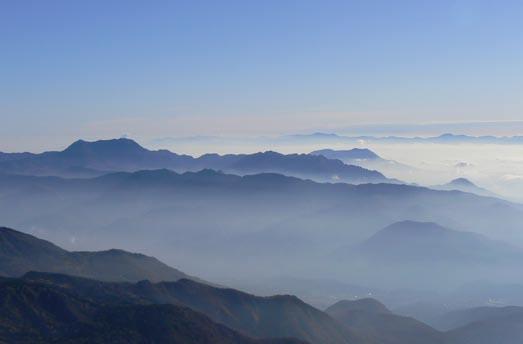
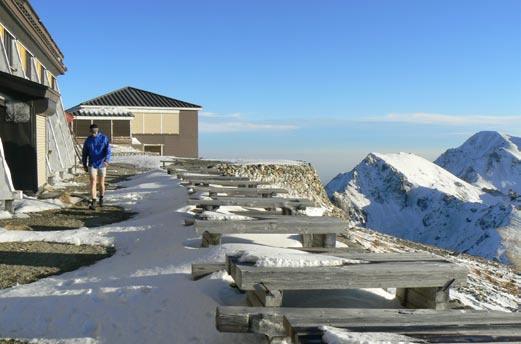
Our tramp took us from Sarukura (1250m) up through the autumn coloured forest to the Daisekkei, the big snow valley, which holds snow year round. After five hours of climbing we reached a hut that was more like a hotel which sleeps up to 1000 people, and even has a post office and a vending machine. But we were lucky, the tramping season ended a week ago and the hut was closed. We were alone and put up our tent on the lee side of the hut. After that we wandered to the summit of Shirouma- dake (2932m), the ‘white horse’ named for the snow cap on the mountain. We cooked our dinner with a fantastic view over several mountain ridges in different shades of blue.
View while cooking dinner
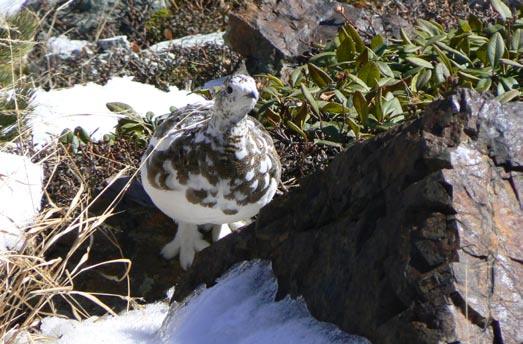
Next morning the snow was icy. Unfortunately we didn’t take ice axes or crampons and I worried that we would make headlines as stupid tourists who ventured ill equipped into the mountains. Isn’t that what we say about foreign tourists? Luckily as the sun rose the snow soft- ened and soon we sidled below the summit of Yari-ga-take (2903m). After a steep 600 metre drop we reached Yari- Onsen, a natural hot pool. Normally there are changing rooms and entrance fees, but now everything was packed away for winter and we quickly shed clothes and sank hap- pily into the 44°C warm water. While soaking we enjoyed panoramic views of mountains and the valley below. Drag- ging ourselves out of the pool we continued to descend and disturbed a ptarmigan, half brown half white, already changing into its winter plumage.
Back at the trailhead we unlocked the bikes and it was pure joy to freewheel down the mountain, flying through the autumn colours. Back at the hostel we were treated to a visit to the village onsen; a Japanese bath, strictly sepa- rated by men and women and later a traditional Japanese fondue, where vegetables and meat are boiled in a pot with
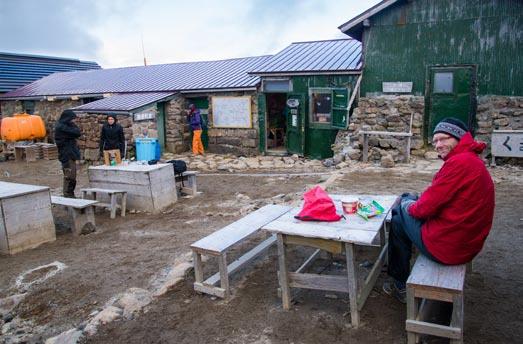
Ptarmigan Stuart sitting outside the grotty hut miso soup.
One walk that really stood out and became the high- light of our trip was a day walk around Nara, which was Japan’s capital from 710 to 784. For us it was like a treasure hunt: discovering the countryside with trees full or persimmons, mandarins and fresh figs which we bought for a few yen at honesty road side stalls; walking through forest and country lanes; stumbling across temples where monks swept court yards with ancient brooms; finding emperor tombs more than 1300 years old; seeing food offerings at shrines under the green canopy of trees; and listening to barking dogs while we passed rice paddies and ponds with floating lotus leaves.
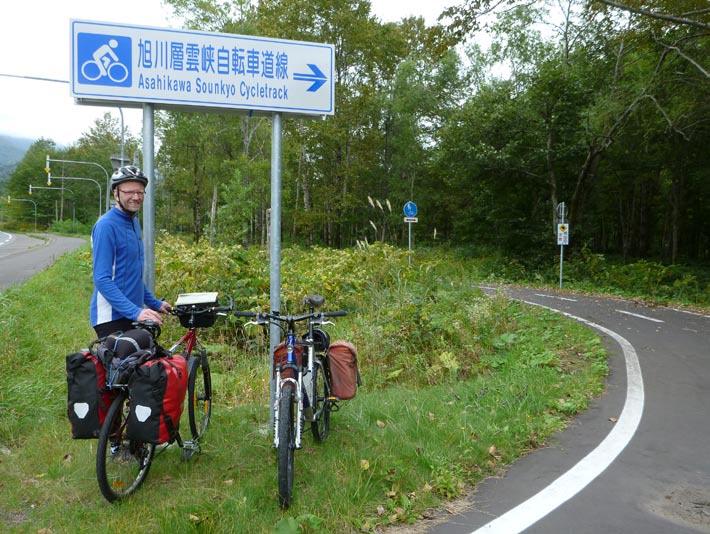
On our second trip to Japan we took our bikes with the aim to explore Japan’s northern most island Hokkaidō on two wheels. From Sapporo we took the train to Asa- hikawa and cycled on the well-designed cycle path to Sōunkyō Onsen. Little did we know that it was the beginning of a long weekend and the popular autumn colour viewing and accommodation was very tight. Next morning we stocked up on supplies in a little store. Not much in the normal way of tramping food, but we found rice triangles filled with salmon, tuna, or fermented seaweed wrapped in nori - a good and tasty snack. Dinner was more difficult and pots with 2-minute noodles had to suffice.
A great thing about tramping in Japan is that cable cars can whisk you up the mountain in no time. At the top of the Sōunkyō rope- way we joined the long queues of people who
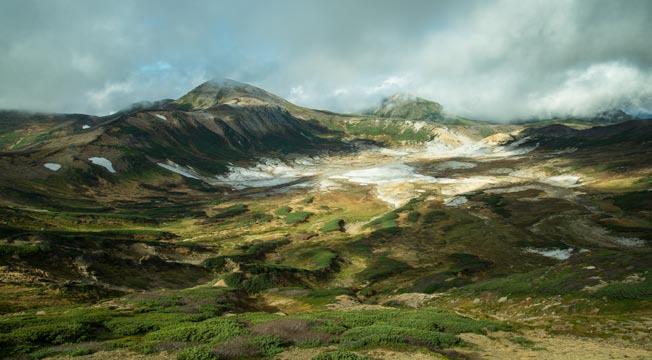
View from the crater rim walk wound their way up to the top of Mt Kurodake (1984 m) in Daisetsuzan National Park. Tramping in Japan is not re- ally a solitary activity. As long as access is easy you will find crowds. We planned to stay at a hut and do a loop walk next day to Mt Asahidake (2291 m) the highest mountain in Hokkaidō and an active volcano. Unfortunately the hut was a real hovel, draughty, dark without windows and with a dirt floor, not the nice cosy retreats we are used to in New Zealand. The outside bio toilet was funky, after doing the business one had to pedal a modified bike to stir the sh….
After a night with lots of snoring I got up early for the sunrise. Normally I am alone when I clamber around in the dark but this time there was a line of torch lights in front of me and I had to share the sunrise with 43 others! This is after all the land of the rising sun. When I got back to the hut Stuart was probably the only one still in bed at 7 a.m. Our walk that day took us around the crater rim. From the top of Mt Asahidake steam was rising out of vents and vivid greens, yellows and white were signs of volcanic activity.
From Daisetsuzan National Park we cycled north to Akan National Park where Meakan-dake (1400 m) makes a good half day trip, with some adrenaline thrown in for the larger than usual chance to bump into a bear, and the volcanic siren system that was put in place to warn trampers of the real danger of volcanic eruptions. From the top you can look down into the 300 m deep crater. From here toxic white fumes billowed up sometimes taking our breath away. Other gems in Akan National Park are the tranquil lakes Mashu and Kussharo and during a day trip without luggage we enjoyed windy roads, funny ball shaped Marimo algae and hot pools at the lake side.
Stuart at the Asahikawa Sounkyo Cycletrack
Our next cycle legs took us along
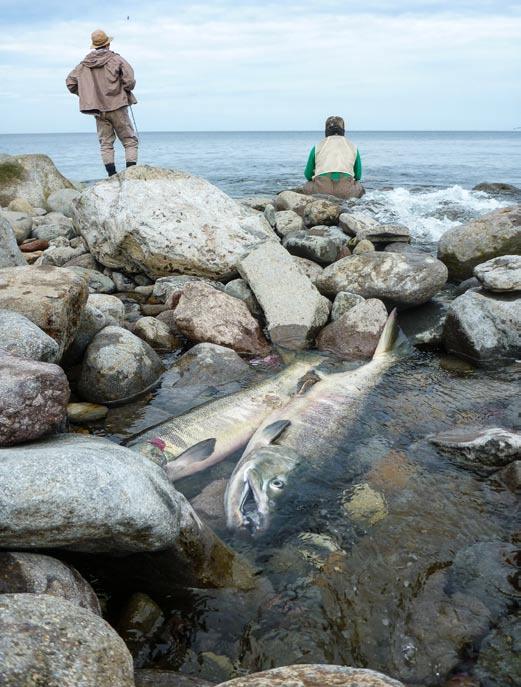
Salmon and fishermen the coast to Shiretoko Peninsula from where one can wave to Russia; so far to the north and east it is. This was also the time of the salmon run and silver fish were clogging the rivers in their mad dash to their spawning grounds and fishermen and bears alike made good use of these circum- stances.
On our trip we normally stayed in Youth Hostels (definitely worthwhile to be a YHA member). Once we also camped for free on the local golf course. Dinner was normally included in the hostels and we were fed on local delicacies of varying quality. The last stop on our Hokkai- do cycle tour was Kushiro Shitsugen National Park, well known for its Japanese red-crowned cranes. On our bikes we explored the dirt roads in the park and were lucky to spot some cranes. Their flight is so graceful that it makes your inner-being hurt. Decimated untill 1952 by careless hunting, their numbers have come back and there are now around 1000 cranes in Japan and every winter photogra- phers flock here to photograph their mating dance.
We had a wonderful time in Japan and discovered the natural side of the land of the rising sun. There are many good tramping opportunities - check out the Lonely Planet guide ‘Hiking in Japan’. And if you asked how many bears we saw, the answer is none – even without any dinging bear bells!
Comments
Comments are not open yet.