
Text taken from the club newsletter.
HIGH FIVES FOR THE DOLOMITES
The Alta Via 1 by KEVIN COLE
The Dolomites is a spectacular region of limestone (dolomitic) rock outcrops criss-crossed by a number of long distance footpaths called Alta Via. The area became a UNESCO World Heritage site in 2009 and rightly so.
In August 2016 Pete Gent and I synchronised our holiday plans in order to tackle the Alta Via 1. Meeting at Gatwick Airport we flew to Innsbruck and took the train to Dobbiaco in Italy to begin our walk.
. DAY 1:
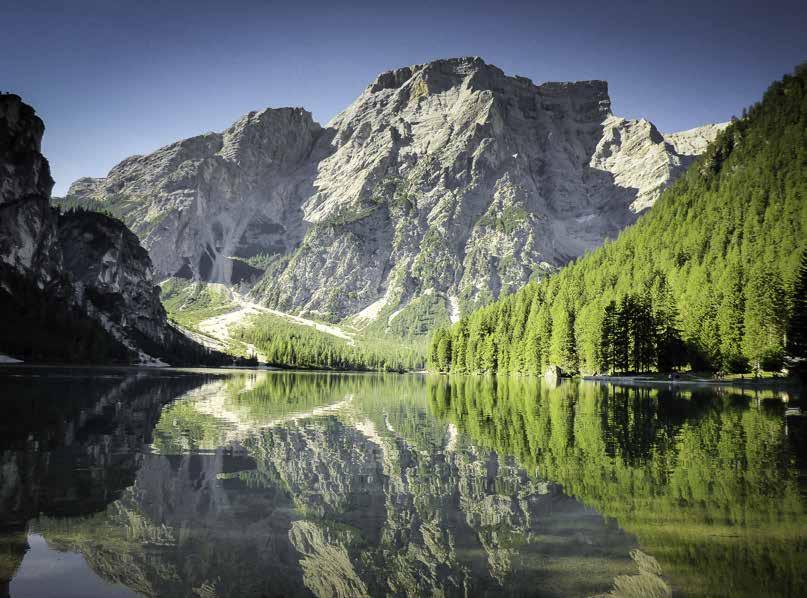
We woke to a bright clear day and after breakfast headed to the bus terminal to catch our transport to the start of the walk. Arriving at Lago di Braies we disembarked and took in the views of the lake and the wonderfully white surrounding peaks, from the grounds of the Impressive Hotel (1,494 m).
Contrary to our guide book (Cicerone) we intended to combine the first two stages of the walk into one 8 hour day and it was already getting very warm.
The route began with a stroll along the wooded lakeside, heading to the far end where we began our first climb of 800 m. The heat and a lingering cold (picked up on the flight over) took its toll. We were supposedly carrying light packs—but we still got overtaken by a bloke carrying a bicycle!
Once above the tree line we were exposed to the full heat of the day. Cresting a ridge we left the views of the lake behind and entered a small canyon appropriately named ‘Forno’ (the oven). By now it was mid-day. Weaving our way among the toppled rocks we found some shade beneath a particularly large boulder and had some lunch.
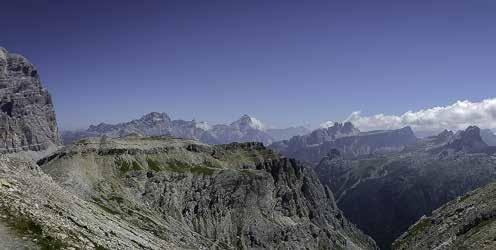
As we climbed out of the canyon at 2,388 m the views opened up in front of us with a skyline full of mountain peaks, a fine reward and a taste of things to come.
From here we were now on Stage 2 of the walk. We followed an un-metaled road for a while, crossing an undulating plain before descending steadily into the Val di Tamersc. Towards the end the gradient got steeper and steeper, until finally on a last set of zigzags it got so steep it was difficult to stay upright. (I’d love to see a vehicle get up that one!).
By this time we were parched so we stopped at the handy Rifugio (Pederu 1,548 m) and guzzled the first of many incredibly refreshing cold drinks (we would be seeking these out like junkies in the following days).
Having lost all of the altitude that we had gained and with another 2 hours and 500 m of climbing to go, our destination Rifugio seemed a long way away. And so we began the final leg but not before Pete, unable to resist the temptation, took a few seconds to stand in a nearby stream to cool his roasting feet. We arrived at Rifugio Fanes around 6 pm, in ample time for a shower before dinner.
DAY 2:
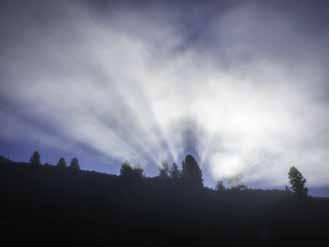
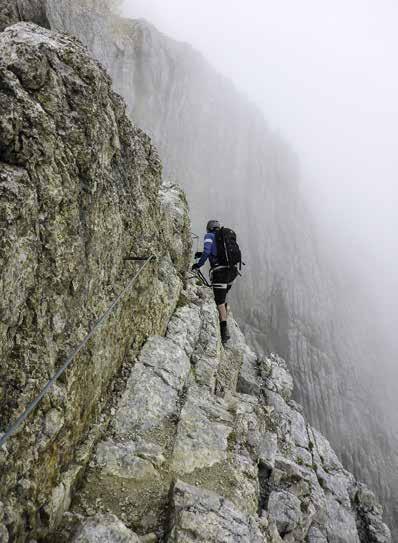
Clutching our packed lunches we left the Rifugio immediately after breakfast. We were engulfed in a swirling mist which teased us for an hour or so, giving us only occasional glimpses of surrounding peaks bathed in sunshine. We didn’t mind as some of the effects were spectacular in themselves
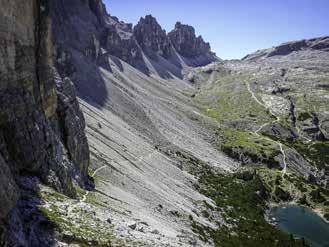
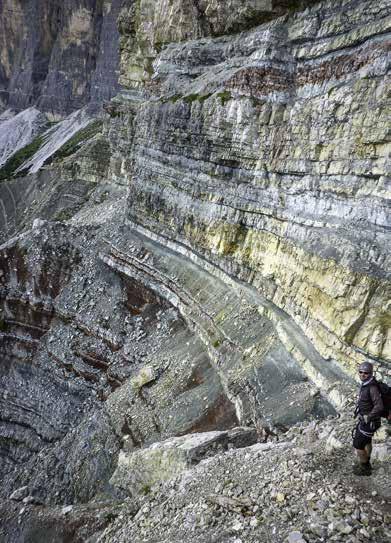
The mist rapidly cleared as we began our ascent to a distant notch on the skyline (Focella del Lago 2,486 m). From the saddle we had great views of that morning’s route. While on the other side there was a steep drop off to a small lake. As we descended the views opened up. Our destination Rifugio was just discernible in the far distance. The scale was deceptive and it was going to be a long hot walk, but with fantastic views.
On reaching another saddle (Focella Lagouzuoi) we were rewarded again with even more breath taking views out across Passo Falzarego. That’s where we were heading next! (If there were a deity I think I’d have high fived him—nice work!).
At this point we turned right on onto a steady zigzag leading up to the Rifugio and cable car 200 m above us. Despite the stunning scenery all around, we were reminded that this was the front line during WW1 as we passed a series of defensive positions dug into a rock wall on our left.
These were Austrian positions giving views out over the road/pass below, with the Italian positions on the other side. It was diffi- cult to reconcile how human beings could fight and die among such spectacular sur- roundings.
On reaching the stu- pendously located Rifugio Lagazoui (2,752 m) we immediately partook in another round of cold drinks to satisfy our thirst.
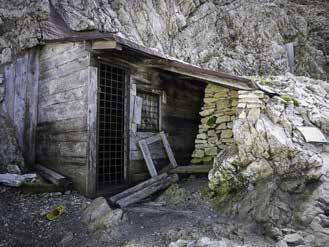
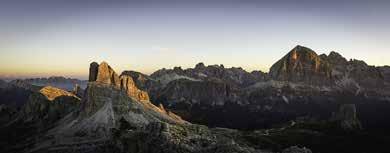
It was only mid-afternoon so we had time to dump our gear in the dormitory. Then with helmets and head torches in hand we went off to explore one of the wartime tunnels that spirals its way inside a large buttress overlooking the valley floor. The entrance was via a small wooden door at the end of an old rebuilt trench system. Inside descended an endless staircase connecting a warren of observation points, gun positions, storage bays and living quarters with some offering the most spectacular views. We ended the day with a short stroll up to the summit of Piccalo Lagazuoi before returning to the Rifugio for dinner. As the sun set the changing light meant the views just kept giving and giving.
DAY 3:
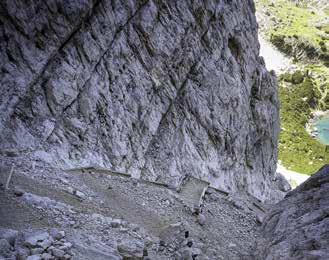
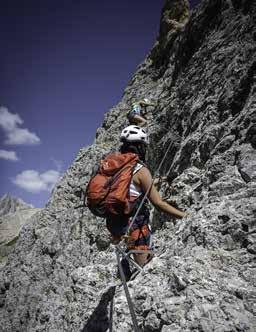
Another bright clear day with fog holding in the western valleys below. Today we were attempting our first real Via Ferrata (fixed cables which are climbed using a special self-belay harness) We descended from the Rifugio and followed the Path of the AV1 to the Col dei Bos where we ditched everything but our via ferrata gear behind a boulder (marking it carefully!). We then left the path climbing until we eventually reached the top of the Via Ferrata
From here it was a steep descent down a large gully to reach the start point. We got good views of people already climbing the buttress as we descended.
The anticipation mounted as we got to the bottom of the gully and sidled across to the start of the Via Ferrata. Owing to its proximity to the road past it was already busy. We sat down and had something to eat and drink before donning our gear and joining the queue. The climb began with a tricky first stage but once beyond that, got easier. Despite being in a bit of a line everybody was having lots of fun. The weather was great, the scenery spectacular, and I was buzzing by the time I reached the top.
After a short rest we were on our way again, recovering our gear and re-joining the path. We then descended to the pass which we now had to cross. It was a bit of a shock to come across the cars and motorbikes of civilisation again but we took full advantage of this civilisation and opted for a chairlift to whisk us up to Rifugio Scoiattoli (2,225 m) helping us to recover some time.
The views from this side of the pass were just as magnificent. Our Destination, Rifugio Nuvolau (2,575 m) could now be seen above us, perched on top of a large flat topped outcrop. As we had only booked the first two nights accommodation, we were very lucky to find that (although being fully booked) somebody had cancelled minutes before we arrived (that’s another high five there Mr G). The location, like the night before was spectacular although the Rifugio itself was basic.
DAY 4:
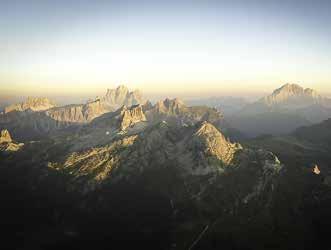
I awoke early and decided that much as I wanted my sleep, this location was worth some early morning photos After breakfast we left via an abrupt descent which included a ladder and some cabled sections. We were soon again down in the valley, this time Passo Giau (2,236 m). Once again we were briefly among the cars and motorbikes of civilisation, only to quickly leave it behind as we crossed the road and moved on. Once more we were greeted with more spectacular outcrops (high fives!). By mid-afternoon we reached Rifugio Citta di Fume (1,917 m) at the base of the impressive Pelmo outcrop (3,168 m) and here we spent the night.
DAY 5:
Fine weather again with rain (and possible thunder) forecast for the afternoon. We left early in order to make the most of the day. As we were at lower altitude everything was much greener this morning. The path followed a series of farm tracks before joining an old zigzagging military road that rose steadily to Rifugio
Coldai at 2,132 m. We stopped for lunch at a spot overlooking a small lake. In the distance we could see a storm brewing. Not wanting to be caught out in a thunderstorm in the mountains we moved on, continuing below the walls of the trident shaped Civetta and then into pleasant farmland. We arrived at Rifugio Vazzoler in time to miss a brief storm later that evening.
DAYS 6 to 9
Having decided that the planned exit route in the next few days would involve Via Ferrata, that were probably going to be too tricky, we decided to exit the AV1 at this point. Walking out to a local village we caught the bus to Belluno. Here a visit to the Library and a local bookshop gave us sufficient information to head to Cortina for some compensatory Via Ferrata bagging. Over the next two days we tried Sentiero Astaldi, Grade 1A, and Tofana di Dentro, Grade 2B.
These ferrata completed a great trip to a spectacular area and I’m sure that we will be returning there very soon.
Comments
Comments are not open yet.